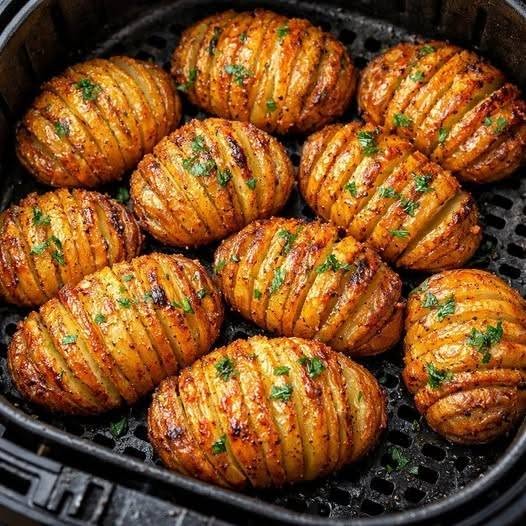
A properly baked potato is a simple dish that can become an incredibly satisfying meal. The goal is to create a deeply crisp, seasoned exterior while keeping the inside soft, fluffy, and tender.
Russet potatoes are particularly well suited to baking because their high starch content and relatively low moisture help produce a light, fluffy interior. Once baked, the potato can be served simply with butter and seasoning or transformed into a complete meal with cheese, vegetables, chicken, chili, or other toppings.
This guide covers everything from selecting and preparing the potatoes to baking, testing for doneness, opening them correctly, choosing toppings, storing leftovers, and avoiding common mistakes.
What Makes a Great Baked Potato?
A successful baked potato has two contrasting textures:
- Outside: Dry, crisp, golden, and well seasoned
- Inside: Soft, fluffy, moist, and easy to scoop
The potato variety, oven temperature, preparation method, and cooking time all affect the final result.
One of the most important techniques is keeping the skin dry before adding oil. Excess moisture can interfere with crisping.
Choosing the Best Potatoes
Large russet potatoes are an excellent choice for baking because their starchy flesh becomes light and fluffy when cooked.
Choose potatoes that:
- Feel firm when pressed
- Have relatively smooth, healthy-looking skin
- Are free from green discoloration
- Have no major soft spots
- Have minimal sprouting
- Are similar in size if you want them to finish at roughly the same time
Large potatoes are especially useful when making loaded baked potatoes because they provide plenty of fluffy interior for toppings.
Equipment Needed
You will need:
- Oven
- Baking tray or oven rack
- Fork
- Paper towels or clean kitchen towel
- Knife
- Small bowl for oil and seasoning
- Oven mitts
A wire rack or direct placement on the oven rack allows hot air to circulate around the potato and can help produce crispier skin.
Preparing the Potatoes
Step 1: Wash Thoroughly
Potatoes grow underground, so their skins can contain dirt and debris.
Place each potato under cool running water and scrub the skin gently with your hands or a clean vegetable brush.
Remove visible dirt from all sides.
Do not soak the potatoes unnecessarily. After washing, dry them thoroughly with paper towels or a clean kitchen towel.
Dry skin is important for crisping.
Step 2: Preheat the Oven
Preheat the oven to:
220°C / 425°F
Allow the oven to reach the target temperature before putting the potatoes inside.
A properly preheated oven provides the strong initial heat needed to dry and crisp the skin while the interior gradually cooks.
Step 3: Pierce the Potatoes
Use a fork to make several small holes around each potato.
Approximately 6–10 punctures per potato are sufficient.
The holes provide pathways for steam to escape as the potato heats.
There is no need to make deep cuts. Small punctures distributed around the potato are enough.
Step 4: Add Oil and Seasoning
Place the dry potatoes on a tray or plate.
Lightly coat each potato with approximately ½ tablespoon of olive oil or melted butter.
Then season with salt and, if desired, black pepper.
Rub the oil over the entire skin so that it is lightly coated rather than heavily saturated.
The oil helps encourage browning and crisping, while the salt seasons the skin directly.
Arranging the Potatoes
There are two practical methods.
Method A: Directly on the Oven Rack
Place the potatoes directly on the center oven rack.
Put a baking tray on a lower rack to catch any oil or moisture that drips during cooking.
This method allows hot air to circulate around the potatoes and generally produces very crisp skin.
Method B: On a Baking Tray
Place the potatoes on a baking tray with space between them.
Avoid crowding them together.
A tray is more convenient for handling and cleanup, especially when preparing several potatoes.
Baking the Potatoes
Place the prepared potatoes in the preheated oven at:
220°C / 425°F
Approximate baking times are:
- Small potatoes: about 45 minutes
- Medium potatoes: about 55–65 minutes
- Large potatoes: about 70–75 minutes
These times are estimates. Potato size, shape, oven accuracy, and the number of potatoes being cooked can all affect the result.
If desired, turn the potatoes approximately halfway through cooking for more even exposure to the oven’s heat.
How to Tell When a Potato Is Done
Don’t rely exclusively on the clock.
A properly baked potato should have:
- Crisp-looking skin
- A soft interior
- A tender center
- No hard or waxy area
Insert a thin knife into the center.
It should slide in easily with little resistance.
You can also carefully press the potato using oven mitts. A fully cooked potato should yield slightly when pressed.
If it remains firm in the center, return it to the oven for another 5–10 minutes and test again.
Resting the Potatoes
Once cooked, remove the potatoes carefully from the oven.
Allow them to rest for approximately 5 minutes.
This gives the interior a brief opportunity to settle and makes the potato easier to handle.
For the fluffiest texture, avoid leaving the potato tightly covered during this period because trapped steam can soften the crisp skin.
Opening a Baked Potato
For a classic presentation, place the potato on a plate and use a knife to make a long slit along the top.
Carefully press the ends inward so the potato opens.
Use a fork to gently loosen and fluff the interior.
The fluffy center is now ready for butter, cheese, vegetables, meat, sauces, or other toppings.
Ingredients
Potatoes
- 4 large russet potatoes
- 2 tablespoons olive oil or melted butter
- 1½ teaspoons salt
- 1 teaspoon black pepper, optional
Optional Toppings
- Butter
- Sour cream
- Shredded cheddar cheese
- Chopped green onions
- Cooked bacon pieces
- Steamed broccoli
- Chili
- Garlic butter
- Fresh parsley
- Jalapeños
- Chili flakes
- Cooked chicken
- Minced meat
Quick Instructions
- Wash and scrub the potatoes thoroughly.
- Dry them completely.
- Preheat the oven to 220°C / 425°F.
- Pierce each potato approximately 6–10 times with a fork.
- Rub the potatoes with olive oil or melted butter.
- Season the skins with salt and optional black pepper.
- Place the potatoes directly on the oven rack or on a baking tray.
- Bake for approximately 45–75 minutes, depending on size.
- Turn them halfway through if desired.
- Test the center with a knife. It should slide in easily.
- Rest the potatoes for approximately 5 minutes.
- Cut a slit across the top and gently open each potato.
- Fluff the inside with a fork.
- Add your preferred toppings and serve immediately.
Classic Topping Combination
For a traditional baked potato, add:
- Butter
- Salt
- Black pepper
Allow the butter to melt into the fluffy center before serving.
Fully Loaded Baked Potato
For a hearty meal, add:
- Butter
- Sour cream
- Cheddar cheese
- Cooked bacon
- Green onions
- Black pepper
The combination of creamy, salty, cheesy, and crisp ingredients makes this a particularly filling option.
Vegetable Baked Potato
For a vegetable-focused version, top with:
- Steamed broccoli
- Cheddar or another melting cheese
- Fresh herbs
- Black pepper
- A small amount of sour cream or yogurt
This can work as either a side dish or a light meal.
Spicy Baked Potato
Add:
- Chili
- Jalapeños
- Chili flakes
- Cheddar cheese
- Green onions
Adjust the amount of chili according to your preferred level of heat.
Garlic and Herb Version
Mix softened butter with:
- Garlic
- Parsley
- Rosemary
- Black pepper
Add the garlic-herb butter to the hot potato and allow it to melt through the fluffy interior.
Cheese-Filled Version
For a richer potato, add a combination of:
- Cheddar
- Mozzarella
- Parmesan
Place the cheese inside the opened potato and return it briefly to the oven until the cheese melts.
Chicken-Stuffed Potato
Turn the baked potato into a complete meal by adding:
- Shredded cooked chicken
- Cheese
- A creamy sauce
- Green onions
- Black pepper
Return the filled potato to the oven for several minutes if you want the cheese to become melted and lightly browned.
Important Tips for Extra-Crispy Skin
Don’t Wrap the Potato in Foil
Wrapping potatoes tightly in foil traps steam.
This creates softer skin rather than the dry, crispy exterior associated with a classic oven-baked potato.
If soft skin is your preference, foil can be used, but it is not the best choice for maximum crispness.
Dry Before Oiling
After washing, thoroughly dry the potatoes.
Water remaining on the skin can interfere with browning.
Don’t Use Excessive Oil
A thin coating is enough.
Too much oil can make the skin greasy rather than pleasantly crisp.
Use a Hot Oven
The relatively high baking temperature helps develop a crisp exterior while the inside gradually becomes tender.
Don’t Judge Doneness by Appearance Alone
A potato can look beautifully browned while remaining firm inside.
Always test the thickest part with a knife or skewer before serving.
Optional Shortcut: Microwave and Oven
If you’re short on time, you can partially cook the potatoes in a microwave before finishing them in the oven.
The microwave speeds up the cooking of the interior, while the oven provides the crisp exterior.
For the best texture, finish the potatoes in a hot oven rather than relying exclusively on the microwave.
Storage
Refrigerator
Allow leftover potatoes to cool appropriately and store them in a sealed refrigerator-safe container.
For best quality, use refrigerated baked potatoes within approximately 3–4 days.
Freezer
Baked potatoes can be wrapped securely and frozen for approximately 1–3 months.
The texture may change slightly after freezing and thawing, particularly if the potato was heavily topped before freezing.
For better results, freeze plain baked potatoes and add fresh toppings after reheating.
Reheating
Oven
For the best balance of a hot interior and crisp skin:
180°C / 350°F for approximately 15–20 minutes
The exact time depends on the size and whether the potato is refrigerated or frozen.
Microwave
For a faster option:
Approximately 2–4 minutes
Microwave heating is convenient but generally produces softer skin.
For better texture, microwave until heated through and then finish briefly in a hot oven.
Common Mistakes
1. Leaving the Skin Wet
Problem: The skin stays soft.
Solution: Dry the potatoes thoroughly before applying oil.
2. Using Too Low a Temperature
Problem: The potato may cook slowly without developing crisp skin.
Solution: Use a properly preheated oven at approximately 220°C / 425°F.
3. Not Piercing the Potatoes
Problem: Steam can build up inside the potato.
Solution: Make several small fork punctures before baking.
4. Wrapping in Foil
Problem: Steam softens the skin.
Solution: Leave the potatoes uncovered when crispy skin is the goal.
5. Cutting Too Early
Problem: The potato may be difficult to handle and the interior can seem less settled.
Solution: Allow it to rest for approximately 5 minutes before opening.
6. Overcooking
Problem: The interior becomes dry and the skin can become excessively hard.
Solution: Begin checking large potatoes near the expected finishing time and remove them once the center is completely tender.
Approximate Nutrition
For one plain large baked potato, without toppings, the nutritional content can vary according to potato size.
A general estimate is:
- Calories: approximately 160–220 kcal
- Carbohydrates: approximately 37 g
- Protein: approximately 4 g
- Fat: approximately 0–2 g
- Fiber: approximately 4 g
Adding butter, cheese, sour cream, bacon, meat, sauces, or other toppings will increase the calorie and macronutrient content.
Duration
- Preparation: Approximately 15 minutes
- Baking: Approximately 45–75 minutes
- Resting: Approximately 5 minutes
- Total: Approximately 1 hour–1 hour 30 minutes
Larger potatoes generally require more time than smaller potatoes.
Serving Suggestions
Baked potatoes pair naturally with:
- Grilled chicken
- Steak
- Fish
- Roasted vegetables
- Fresh salad
- Soup
- Chili
- Cooked minced meat
A large potato with protein, vegetables, cheese, or another substantial topping can also serve as the centerpiece of a complete meal.