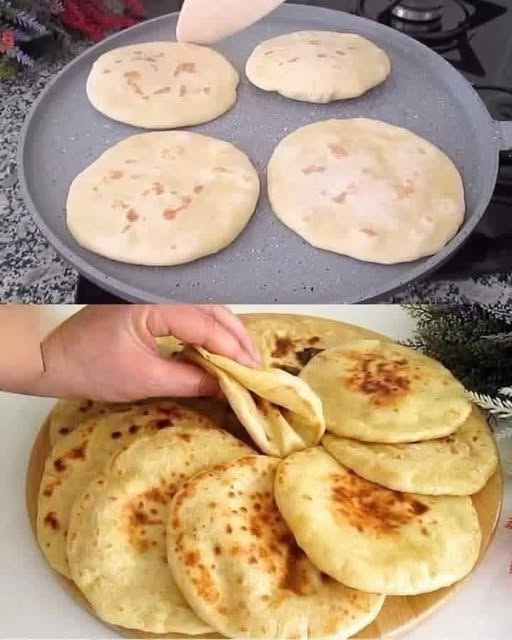
Soft skillet flatbread is one of the simplest homemade breads you can prepare when you want something warm, tender, and versatile without turning on the oven. Made with a straightforward dough and cooked directly in a hot skillet, these flatbreads develop lightly golden spots on the surface while staying soft and flexible in the center.
They are perfect for wraps, sandwiches, dipping, scooping up curries, serving alongside soups, or simply enjoying warm with butter or olive oil.
The best part is that you do not need a bread machine, complicated shaping technique, or long fermentation period. The dough is made with everyday pantry ingredients, rested briefly, divided into portions, rolled into thin rounds, and cooked in a skillet until lightly browned.
The result is a homemade bread that is soft enough to fold without cracking while still being sturdy enough to hold fillings.
Why You’ll Love This Flatbread
This recipe is particularly useful when you want fresh bread quickly.
Unlike yeast-based breads, this version does not require a lengthy rising period. The dough only needs a short rest before it can be shaped and cooked.
The basic recipe also provides a flexible foundation for countless variations. You can keep the flatbread plain, add garlic and herbs, introduce a little spice, or sprinkle seeds over the surface.
The bread can be served with breakfast, lunch, dinner, or as a snack.
What Creates Soft Flatbread?
Several small details have a major effect on the finished texture.
The dough needs enough water to become soft and pliable. Adding the water gradually is important because different brands of flour absorb different amounts of liquid.
A short resting period allows the flour to absorb moisture and gives the dough time to relax. This makes rolling much easier.
Another important factor is the amount of flour used during shaping. Adding too much flour can make the dough stiff and ultimately produce dry flatbread.
Finally, cooking temperature matters. A properly heated skillet allows the bread to develop golden spots relatively quickly without drying out the center.
Choosing the Flour
All-purpose flour works particularly well because it produces a dough that is easy to mix, knead, and roll.
The exact amount of water may vary according to humidity, flour type, and how the flour was measured. Rather than adding all the water at once, gradually incorporate it until the dough becomes soft and workable.
The finished dough should feel supple and slightly soft but should not be excessively wet or sticky.
Preparing the Dough
Start by combining the flour, baking powder, salt, and any dry seasonings in a large bowl.
Mixing the dry ingredients first helps distribute the salt and baking powder evenly.
Add the olive oil or melted butter and work it into the flour mixture. The flour may begin to resemble coarse crumbs.
Next, gradually add warm water while stirring. Continue adding small amounts until the mixture forms a soft dough.
You may not need the entire amount of water listed in the recipe.
Kneading the Dough
Transfer the dough to a lightly floured surface and knead it gently for approximately 2–4 minutes.
There is no need for extensive kneading because this is not a traditional yeast bread. The goal is simply to bring the dough together and make it smooth and cohesive.
Try not to compensate for stickiness by adding large quantities of flour. A slightly soft dough generally produces a softer flatbread.
Why Resting Matters
Place the dough in a clean bowl and cover it with a kitchen towel or plastic wrap.
Let it rest for approximately 15–20 minutes.
During this time, the flour absorbs the water and the dough relaxes. This makes it less likely to spring back when rolled.
If the dough continues shrinking after you begin shaping it, give it another 5–10 minutes of rest before continuing.
Dividing the Dough
After resting, transfer the dough to your work surface and divide it into approximately eight equal pieces.
Roll each portion gently into a ball.
Keep the dough balls covered while working with them. Exposed dough can dry out, particularly if the room is warm or dry.
Rolling the Flatbreads
Take one dough ball and flatten it gently with your fingertips.
Roll it into a thin round using a rolling pin.
The thickness can be adjusted according to how you plan to use the bread.
For wraps and sandwiches, roll the dough relatively thin. For a softer, slightly thicker flatbread, leave it a little thicker.
Do not worry about making perfectly circular shapes. Slightly irregular edges are perfectly normal with homemade flatbread.
Avoiding Excess Flour
Use only a small amount of flour while rolling.
Too much flour can make the finished bread dry and can also fall into the skillet and burn.
If the dough sticks, lightly dust the work surface or rolling pin instead of coating the dough heavily.
Heating the Skillet
Use a heavy skillet, cast-iron pan, stainless-steel skillet, or suitable nonstick frying pan.
Place the skillet over medium heat and allow it to become properly hot before cooking.
A dry skillet works well for this recipe. If desired, you can lightly brush the surface with oil, but there is generally no need for a large amount of cooking fat.
The pan should be hot enough to produce a gentle sizzle when the dough is placed inside but should not be smoking.
Cooking the Flatbread
Place the rolled dough carefully into the hot skillet.
Cook the first side for approximately 45–90 seconds. Small bubbles should begin appearing on the surface, and the underside should develop golden or light brown spots.
Flip the flatbread and cook the second side for another 30–90 seconds.
The exact timing will depend on the thickness of the dough, the skillet, and the heat level.
If the bread is becoming dark before the center is cooked, lower the heat slightly. If it remains pale and takes too long to cook, increase the heat modestly.
Keeping the Flatbreads Soft
As each flatbread comes out of the skillet, place it on a clean plate and immediately cover it with a clean kitchen towel.
You can also stack the cooked flatbreads together and cover the entire stack.
The trapped warmth helps prevent moisture from escaping too quickly.
If you leave the flatbreads uncovered for a long time, they can gradually become firm and less flexible.
Adding Butter or Oil
For extra richness and softness, lightly brush each hot flatbread with melted butter or olive oil.
For a garlic version, combine melted butter with a little garlic powder and finely chopped parsley before brushing it over the warm bread.
Only a small amount is necessary.
Garlic Flatbread
For a simple garlic variation, add approximately ½ teaspoon of garlic powder to the dough.
After cooking, brush the warm flatbread with melted butter mixed with a little more garlic powder and chopped parsley.
This version pairs especially well with soups, curries, grilled meats, and roasted vegetables.
Herb Flatbread
Add dried oregano, parsley, Italian seasoning, or another favorite dried herb to the dough.
Fresh cilantro or parsley can also be used. Finely chop fresh herbs so they distribute more evenly.
Spicy Flatbread
For a little heat, add chili flakes or a small amount of chili powder to the dough.
You can also brush the finished flatbread with chili-infused butter.
Spicy flatbread is particularly good with grilled chicken, kebabs, curries, and roasted vegetables.
Sesame Flatbread
Sprinkle sesame seeds over the rolled dough before cooking.
Gently press the seeds into the surface with a rolling pin so they adhere.
The seeds toast lightly in the skillet and add a pleasant nutty flavor.
Nigella Seed Flatbread
Nigella seeds provide a distinctive savory aroma and work beautifully with curries, grilled meats, yogurt sauces, and chutneys.
Sprinkle a small amount over the rolled dough and gently press them into the surface before cooking.
Butter Flatbread
For a richer version, use melted butter instead of olive oil in the dough.
After cooking, brush the bread with additional melted butter and stack the flatbreads under a towel.
The result is especially tender and fragrant.
Olive Oil Flatbread
Olive oil gives the bread a slightly lighter, mildly fruity flavor.
Use a flavorful olive oil if you want its character to be noticeable.
After cooking, brush the bread lightly with olive oil and add herbs or seasoning if desired.
Serving With Curries
Soft skillet flatbread is an excellent companion for saucy meals.
Tear the bread into pieces and use it to scoop up chicken curry, beef curry, vegetable curry, lentils, chickpeas, or other dishes containing flavorful sauces.
Its flexible texture makes it particularly convenient for thick gravies and stews.
Serving With Grilled Chicken
Use the flatbread as a homemade wrap.
Fill it with grilled chicken, lettuce, tomato, cucumber, onion, and your favorite sauce.
Fold the bread around the filling and serve while warm.
Serving With Kebabs
Place grilled meat in the center of a warm flatbread and add fresh vegetables, herbs, yogurt sauce, or chutney.
Fold the bread around the filling for an easy homemade kebab wrap.
Serving With Eggs
These flatbreads are also excellent for breakfast.
Serve them with scrambled eggs, fried eggs, omelets, or boiled eggs. A warm flatbread with butter and eggs makes a simple and satisfying meal.
Serving With Soup
Use the flatbread instead of traditional sliced bread.
Garlic and herb versions are especially good alongside tomato, mushroom, chicken, and vegetable soups.
The bread can be torn into pieces and dipped directly into the soup.
Serving With Hummus
Warm flatbread and hummus make an easy snack or light meal.
Cut the flatbread into triangles and serve it with hummus. For additional flavor, brush it with olive oil and sprinkle with paprika, herbs, sesame seeds, or black pepper.
Serving With Yogurt Dip
A simple yogurt dip pairs beautifully with warm flatbread.
Combine plain yogurt with chopped herbs, garlic, salt, and a small amount of lemon juice.
The cool, creamy dip provides a pleasant contrast to the warm bread.
Making Flexible Wraps
For wraps, roll the dough relatively thin and avoid overcooking it.
As soon as light golden spots develop and the bread is cooked through, remove it from the skillet.
Immediately cover it with a towel so it stays flexible.
Overcooked flatbread can become brittle and may crack when folded.
Making Thicker Flatbread
For a thicker, softer bread, leave the dough slightly thicker when rolling.
Cook over moderate heat so the center has enough time to cook before the surface becomes too dark.
Thicker flatbreads may require slightly longer cooking than thin wraps.
Common Mistake: Too Much Flour
One of the most common causes of tough flatbread is adding excessive flour.
If the dough feels slightly sticky, do not immediately cover it in flour. Give it a few minutes to rest first.
If additional flour is needed, use only a small amount on the work surface or rolling pin.
Common Mistake: Overcooking
Flatbread generally cooks quickly in a properly heated skillet.
If the bread is left in the pan too long, moisture is lost and the finished texture can become dry.
Once golden spots appear and the bread is cooked through, remove it.
Common Mistake: Skillet Too Cold
A skillet that is not hot enough can leave the bread pale and dry.
Preheat the pan properly before cooking the first flatbread.
You should notice a gentle sizzle when the dough touches the surface.
Common Mistake: Skillet Too Hot
An excessively hot skillet can brown or burn the exterior before the inside has cooked.
If dark spots appear almost immediately, reduce the heat.
Medium heat is a good starting point, but every stove and skillet behaves differently.
Storing Leftover Flatbread
Allow leftover flatbreads to cool completely.
Place them in an airtight container or sealable food-storage bag.
If storing them for several days, refrigerate them.
For convenience, place parchment paper between individual flatbreads to prevent them from sticking together.
Reheating
To reheat, place a flatbread in a dry skillet over medium-low heat for a short time.
Flip it once and warm the other side.
You can also use an air fryer at a moderate temperature for a brief reheating period.
Avoid excessive heating because it can dry out the bread.
A very light brushing of water or butter before reheating can help restore some softness.
Freezing
These flatbreads freeze well.
Allow them to cool completely, then stack them with parchment paper between the layers.
Place the stack in a freezer-safe bag or container.
When needed, remove the desired number of flatbreads and thaw them before reheating in a skillet.
Freezing them individually or in small stacks makes it easier to use only what you need.
Preparing the Dough Ahead
The dough can be prepared ahead of time and refrigerated in a covered container.
Before shaping, allow it to sit briefly so it becomes easier to handle.
Cold dough may feel firmer and resist rolling, but a short rest can make it more cooperative.
Making a Larger Batch
The recipe can easily be doubled or adjusted for a larger group.
Maintain the same general proportions of flour, water, fat, salt, and baking powder.
When preparing a larger quantity, keep the unused dough covered so it does not develop a dry surface.
How to Recognize Properly Cooked Flatbread
A good skillet flatbread should be:
- Soft and flexible
- Lightly golden in spots
- Tender in the center
- Easy to fold
- Moist enough to bend without cracking
If the bread cracks immediately, it may have been rolled too thin, overcooked, or left uncovered after cooking.
Flavor Profile
The basic flatbread has a mild and slightly savory flavor.
Olive oil adds subtle fruity richness, while butter gives a richer dairy taste.
Garlic adds savory depth, herbs provide freshness, and chili introduces warmth.
Sesame and nigella seeds contribute toasted, savory notes.
Because the base recipe is relatively mild, it works with everything from simple butter and eggs to strongly flavored curries and grilled meats.
Nutrition Considerations
The nutritional value depends on the ingredients used, the amount of oil or butter added, and the size of each flatbread.
Flour provides most of the carbohydrates, while olive oil or butter contributes fat. Choosing olive oil instead of butter changes the overall fat profile and flavor.
For a more balanced meal, pair the flatbread with a protein source and vegetables, such as eggs, beans, chicken, grilled meat, yogurt, lentils, or a vegetable curry.
Soft Skillet Flatbread
Ingredients
- 2 cups all-purpose flour
- 1 teaspoon baking powder
- ½ teaspoon salt
- 2 tablespoons olive oil or melted butter
- ¾ cup warm water, approximately, added gradually
- Additional flour for shaping, as needed
- Additional melted butter or olive oil for brushing, optional
Optional Flavor Additions
- ½ teaspoon garlic powder
- ½ teaspoon onion powder
- ½ teaspoon dried oregano
- ½ teaspoon dried parsley
- ¼ teaspoon black pepper
- Pinch of chili flakes
- Fresh chopped cilantro
- Fresh chopped parsley
- Sesame seeds
- Nigella seeds
Equipment
- Large mixing bowl
- Measuring cups and spoons
- Whisk or spoon
- Clean work surface
- Rolling pin
- Heavy skillet or frying pan
- Spatula or tongs
- Clean kitchen towel
- Airtight container for storage
Yield
Approximately 8 flatbreads
The exact number depends on how large and thin you roll each portion.
Duration
Preparation: 15 minutes
Resting: 15–20 minutes
Cooking: 15–20 minutes
Total: Approximately 45–55 minutes
Instructions
- Combine the dry ingredients.
Add flour, baking powder, and salt to a large mixing bowl. Add any optional dry seasonings and stir until evenly distributed. - Add the oil or butter.
Pour in the olive oil or melted butter. Mix with a spoon or your fingertips until the flour mixture becomes slightly crumbly. - Add the water gradually.
Slowly add warm water while stirring. Continue adding small amounts until a soft dough begins to form. You may not need the entire amount. - Check the dough.
The dough should be soft, smooth, and pliable without being excessively sticky. If it feels dry, add a small splash of water. If it feels slightly sticky, allow it to rest briefly before adding more flour. - Knead gently.
Transfer the dough to a lightly floured surface and knead for approximately 2–4 minutes, just until it becomes smooth and cohesive. - Rest the dough.
Place the dough in a clean bowl and cover it with a towel or plastic wrap. Rest for 15–20 minutes. - Divide the dough.
Divide the rested dough into approximately eight equal portions and gently roll each piece into a ball. - Keep the dough covered.
Cover the dough balls while working so they do not dry out. - Roll the flatbreads.
Take one dough ball and flatten it. Roll it into a thin, reasonably even round. Use only a small amount of flour if needed. - Heat the skillet.
Place a heavy skillet over medium heat and allow it to become properly hot. The pan should be hot enough to create a gentle sizzle but should not smoke. - Cook the first side.
Place the flatbread into the dry skillet. Cook for approximately 45–90 seconds, or until small bubbles form and golden spots appear underneath. - Flip.
Turn the flatbread over and cook the second side for approximately 30–90 seconds, until lightly browned. - Adjust the heat.
If the bread is browning too quickly, reduce the heat. If it remains pale for too long, increase the heat slightly. - Keep cooked flatbreads covered.
Transfer each finished flatbread to a plate and immediately cover it with a clean kitchen towel. Stack the breads as you go. - Brush with butter or oil.
For extra softness and flavor, lightly brush the warm flatbreads with melted butter or olive oil. - Serve.
Enjoy warm with curries, soups, eggs, hummus, yogurt dip, grilled meats, vegetables, or your favorite fillings.
Estimated Nutrition
Approximate nutrition per flatbread, assuming the recipe produces eight flatbreads and uses olive oil in the dough:
- Calories: approximately 150 kcal
- Protein: approximately 4 g
- Carbohydrates: approximately 25 g
- Fat: approximately 4–5 g
- Fiber: approximately 1 g
- Sodium: approximately 150 mg before additional salt or toppings
These are estimates and can vary according to the flour brand, exact amount of water and oil used, portion size, and optional toppings.
Storage
Allow cooked flatbreads to cool completely before storing.
Keep them in an airtight container or sealed bag. Refrigerate if storing for several days.
For longer storage, freeze the flatbreads with parchment paper between them and place them in a freezer-safe container or bag.
Reheating
For the softest result, reheat a flatbread briefly in a dry skillet over medium-low heat.
You can also use an air fryer for a short period at moderate heat.
Avoid prolonged reheating because it can make the bread dry.
Best Results at a Glance
- Keep the dough soft and pliable.
- Add water gradually rather than all at once.
- Rest the dough before rolling.
- Avoid excessive flour during shaping.
- Preheat the skillet properly.
- Cook quickly enough to retain moisture.
- Do not let the bread become deeply browned.
- Cover finished flatbreads immediately.
- Brush with butter or olive oil for extra softness.
- Serve warm whenever possible.
This soft skillet flatbread is an easy homemade alternative to packaged bread and requires no oven or complicated equipment. Once the basic dough becomes familiar, you can turn it into garlic, herb, spicy, sesame, nigella, butter, or olive-oil flatbreads and serve them with almost any meal.