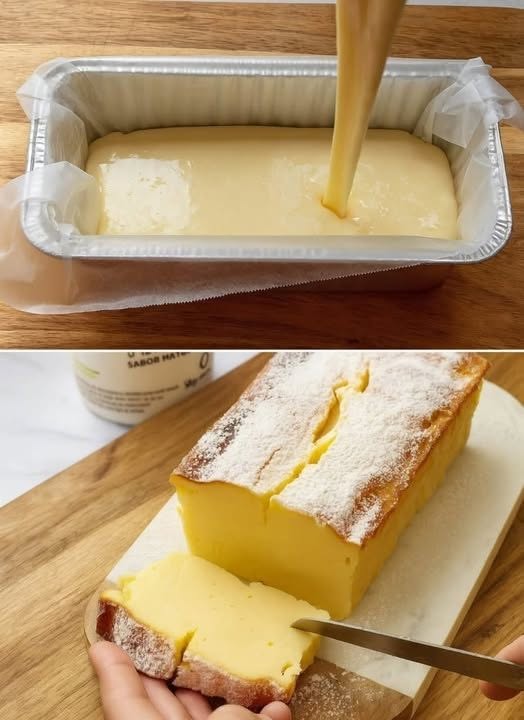
Homemade cakes often have a reputation for being time-consuming, requiring multiple layers, rich frostings, and specialized decorating equipment. Fortunately, this Low-Calorie Greek Yogurt Cake proves that a delicious homemade dessert can be both simple and rewarding. Made with everyday pantry ingredients, this loaf cake delivers a wonderfully soft crumb, delicate sweetness, and lasting moisture without relying on butter or complicated baking techniques.
The recipe uses Greek yogurt as its star ingredient, creating a cake that is light, tender, and satisfying while adding protein and creaminess. Instead of butter, extra virgin olive oil provides moisture that keeps every slice soft for several days. The result is a versatile cake that can be enjoyed for breakfast, as an afternoon snack with coffee or tea, or as a light dessert after dinner.
One of the greatest advantages of this recipe is its simplicity. With only two mixing bowls—one for dry ingredients and one for wet ingredients—the batter comes together in just a few minutes. There is no need for electric mixers, advanced baking skills, or expensive ingredients. Even beginner bakers can achieve consistent, bakery-style results.
Why This Recipe Works
Every successful cake depends on achieving the right balance of moisture, structure, and flavor. Each ingredient in this recipe contributes to that balance.
Greek yogurt provides moisture while producing a tender crumb. Its natural acidity reacts with baking soda, creating tiny air bubbles that help the cake rise evenly. This process produces a light texture without making the loaf dry or crumbly.
Extra virgin olive oil replaces butter while contributing richness and softness. Since olive oil remains liquid even after cooling, the cake stays moist longer than cakes made with butter. Using a mild olive oil allows the subtle flavors of vanilla and yogurt to remain the stars of the recipe.
Eggs provide structure and stability. They bind the ingredients together while helping the loaf rise evenly during baking. Once baked, they contribute to clean slices with a fine, even crumb.
Granulated sugar adds sweetness while also retaining moisture. It prevents the cake from drying out and contributes to the attractive golden crust.
Vanilla extract enhances the overall flavor by adding warmth and aroma without overpowering the yogurt’s gentle tang.
The Secret Behind Greek Yogurt
Greek yogurt is much more than a simple substitute for butter or sour cream. Its thick consistency adds richness while naturally improving texture.
The acidity found in yogurt reacts with baking soda, producing carbon dioxide that expands in the oven. This reaction creates a lighter cake with a delicate crumb.
Greek yogurt also adds subtle tanginess, balancing the sweetness and making the finished loaf taste fresh rather than overly sugary.
Its high moisture content keeps the cake tender for several days, making it an excellent recipe for baking ahead of gatherings or preparing weekly snacks.
Everyday Ingredients with Important Roles
Although the ingredient list is short, every component serves a specific purpose.
All-purpose flour creates the structure that supports the moist batter while maintaining a soft texture.
Baking powder and baking soda work together to provide even lift throughout the loaf, preventing dense or heavy sections.
Salt enhances every flavor while balancing sweetness.
Greek yogurt provides creaminess, moisture, and protein.
Granulated sugar sweetens the cake while keeping it soft.
Eggs strengthen the batter and improve texture.
Extra virgin olive oil supplies lasting moisture and richness.
Vanilla extract adds depth and aroma.
Optional toppings like powdered sugar, Greek yogurt, and fresh fruit provide attractive presentation and additional flavor.
Preparation Tips
Preparing ingredients before mixing makes baking smoother and more successful.
Preheat the oven completely before preparing the batter. A properly heated oven helps the cake rise immediately once placed inside.
Grease the loaf pan lightly and line it with parchment paper, allowing excess paper to hang over the sides for easy removal after baking.
Measure every ingredient carefully before mixing. Accurate measurements help maintain the ideal balance between moisture and structure.
Keep refrigerated ingredients at room temperature whenever possible. Eggs and yogurt blend more smoothly into the batter and create a more even texture.
Mixing the Batter
Whisk the dry ingredients thoroughly to distribute the leavening agents evenly.
In a separate bowl, whisk together Greek yogurt, sugar, eggs, olive oil, and vanilla until smooth.
Gradually fold the dry mixture into the wet ingredients using a rubber spatula. Stir only until no dry flour remains.
Avoid overmixing. Excessive stirring develops gluten, producing a firmer cake instead of the desired tender crumb.
The finished batter should be smooth, thick, and easy to spread into the prepared loaf pan.
Baking Tips
Spread the batter evenly inside the pan to encourage an attractive rise.
Bake until the loaf develops a lightly golden surface and the center is fully baked.
Avoid opening the oven door during the first 40 minutes, as sudden temperature changes may interrupt the rising process.
Insert a toothpick into the center near the end of baking. If it comes out clean or with only a few dry crumbs attached, the cake is ready.
If wet batter remains, continue baking for several more minutes before testing again.
Cooling Properly
Cooling is an important step that affects both texture and slicing.
Allow the loaf to remain in the pan for approximately 10 minutes after baking. This gives the structure time to firm slightly.
Lift the cake from the pan using the parchment paper and transfer it to a wire rack.
Cool completely before slicing. Fully cooled cake produces cleaner slices and allows flavors to develop fully.
Serving Ideas
This cake is delicious on its own but also pairs beautifully with simple toppings.
Dust lightly with powdered sugar for an elegant finish.
Serve with a spoonful of Greek yogurt for additional creaminess.
Fresh berries, peaches, citrus slices, figs, or cherries complement the yogurt flavor beautifully.
A drizzle of honey or maple syrup creates a sweeter dessert.
For special occasions, pair slices with frozen yogurt or vanilla ice cream.
Enjoy it with coffee, tea, or a glass of cold milk.
Flavor Variations
The basic recipe can easily be customized.
Add fresh lemon or orange zest for bright citrus flavor.
Fold blueberries, raspberries, or diced strawberries into the batter.
Mix in chocolate chips or chopped dark chocolate.
Replace part of the flour with almond flour and add almond extract.
Add cinnamon, nutmeg, or cardamom for warm spice notes.
Mix in chopped walnuts, pecans, or pistachios for added crunch.
Use poppy seeds with lemon zest for a bakery-style variation.
Storage Tips
Store completely cooled cake tightly wrapped at room temperature for up to four days.
For longer storage, refrigerate for up to one week in an airtight container.
Freeze individual slices for up to three months. Wrap each slice tightly before freezing and thaw at room temperature before serving.
Why You’ll Love This Recipe
This Greek Yogurt Cake combines convenience, nutrition, and wonderful flavor in one easy recipe. It requires no special equipment, uses affordable ingredients, and consistently produces a moist, tender loaf. Whether enjoyed as breakfast, an afternoon snack, or dessert, it offers balanced sweetness, soft texture, and endless serving possibilities. Its adaptability also allows endless variations, making it a dependable recipe that can be baked throughout the year.
Ingredients
- 1½ cups (180 g) all-purpose flour
- 1½ teaspoons baking powder
- ½ teaspoon baking soda
- ½ teaspoon salt
- 1 cup (227 g) plain Greek yogurt
- 1 cup (200 g) granulated sugar
- 3 large eggs
- ½ cup (120 ml) extra virgin olive oil
- 1 teaspoon vanilla extract
Optional for Serving
- Powdered sugar
- Greek yogurt
- Fresh berries or seasonal fruit
Instructions
- Preheat the oven to 350°F (175°C).
- Grease a 9 × 5-inch loaf pan and line it with parchment paper.
- In a medium bowl, whisk together the flour, baking powder, baking soda, and salt.
- In a separate large bowl, whisk the Greek yogurt, sugar, eggs, olive oil, and vanilla until smooth.
- Gradually add the dry ingredients to the wet ingredients, folding gently until just combined.
- Pour the batter into the prepared loaf pan and smooth the surface.
- Bake for 50–55 minutes, or until a toothpick inserted into the center comes out clean.
- Let the cake cool in the pan for 10 minutes.
- Transfer the cake to a wire rack and cool completely before slicing.
- Dust with powdered sugar if desired and serve with Greek yogurt or fresh fruit.
Preparation Time
- Preparation Time: 5 minutes
- Baking Time: 50–55 minutes
- Cooling Time: 30–60 minutes
- Total Time: Approximately 1 hour 30 minutes
Servings
- 10 slices
Nutrition Information (Per Serving)
| Nutrient | Amount |
|---|---|
| Calories | 273 kcal |
| Protein | 5.7 g |
| Carbohydrates | 35.3 g |
| Sugars | 20.8 g |
| Dietary Fiber | 0.5 g |
| Total Fat | 12.4 g |
| Saturated Fat | 2 g |
| Monounsaturated Fat | 8.4 g |
| Polyunsaturated Fat | 1.5 g |
| Cholesterol | 50 mg |
| Sodium | 261 mg |
| Potassium | 68 mg |
| Calcium | 68 mg |
| Iron | 1.3 mg |
| Vitamin A | 72.5 mcg |
Recipe Yield: 1 loaf (10 servings)
Difficulty: Easy
Cuisine: American
Course: Dessert, Snack, Breakfast, Tea Cake