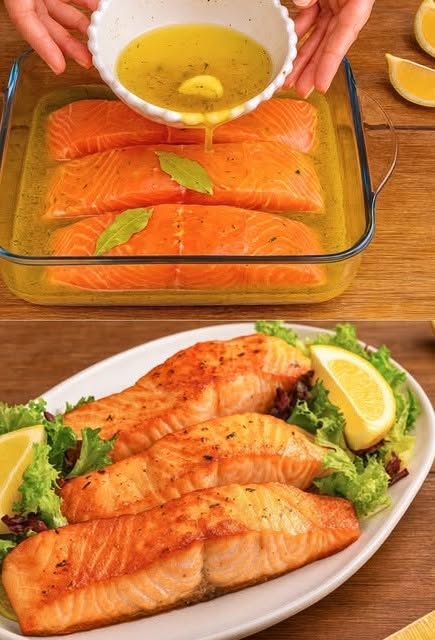
Finding a dinner that is nutritious, flavorful, and easy enough for a busy evening can be difficult. This Lemon Garlic Oven-Baked Salmon brings those qualities together in one simple recipe. Tender salmon fillets are coated with olive oil, fresh garlic, herbs, and lemon before being baked until moist and flaky.
The recipe requires only a handful of everyday ingredients and very little hands-on preparation. Once the salmon is seasoned and placed in the oven, the cooking process takes only a short time, making this an excellent option for weeknight dinners, meal preparation, or casual entertaining.
Salmon has a naturally rich and buttery texture, so it does not need a complicated sauce or lengthy marinade. Olive oil helps keep the surface moist, while garlic contributes savory depth. Dried herbs provide an aromatic character, and fresh lemon balances the richness of the fish with a bright citrus note.
Thin lemon slices placed over the salmon during baking also add visual appeal and allow the citrus aroma to infuse the fish as it cooks.
Recipe Overview
- Recipe Name: Lemon Garlic Oven-Baked Salmon
- Recipe Type: Main Course
- Cuisine: International
- Preparation Time: 10 minutes
- Bake Time: 12–15 minutes
- Total Time: About 25 minutes
- Servings: 4
- Difficulty: Easy
- Cooking Method: Oven-baked
Why You’ll Love This Recipe
This baked salmon is particularly useful when you want a nutritious meal without complicated preparation.
- Requires only a few basic ingredients
- Minimal hands-on preparation
- Bakes quickly
- Uses one baking tray for easier cleanup
- Naturally high in protein
- Provides omega-3 fatty acids
- Pairs with many different side dishes
- Suitable for casual dinners or entertaining
- Easy to customize with herbs and citrus
- Works well for meal preparation
Understanding the Flavor
The flavor of this dish comes from a simple combination of ingredients.
Salmon provides the rich, buttery foundation.
Extra virgin olive oil adds moisture and helps distribute the seasonings across the fish.
Garlic contributes savory warmth and aromatic depth.
Italian herbs add a gentle combination of earthy and fragrant flavors.
Lemon juice provides acidity that balances the richness of the salmon.
Fresh lemon slices add additional citrus aroma while baking.
Fresh parsley or thyme can be used at the end for a bright herbal finish.
The result is a clean, fresh flavor that enhances the salmon without covering up its natural taste.
Choosing Salmon
Good-quality salmon makes a noticeable difference in the final result.
Choose fillets with firm flesh and a fresh appearance. If using frozen salmon, thaw it completely in the refrigerator before cooking and gently pat the fillets dry with paper towels.
Removing excess moisture helps the seasoning adhere to the fish and encourages more consistent cooking.
Salmon fillets can vary considerably in thickness, so cooking time should be treated as a guideline rather than an absolute measurement.
Preparing the Oven
Preheat the oven to 400°F (200°C).
Prepare a large baking tray or baking dish by lining it with parchment paper or lightly greasing it with olive oil. Lining the tray can make cleanup considerably easier.
Preparing the Salmon
Place the salmon fillets in a single layer. Avoid stacking or overlapping them because this can interfere with even cooking.
Season both sides lightly with salt and black pepper.
In a small bowl, combine the olive oil, minced garlic, Italian herb seasoning, and fresh lemon juice from half of the lemon.
Stir the mixture until the ingredients are evenly distributed.
Spoon or brush the mixture over the salmon, concentrating on the top surface while coating the sides as well.
Cut the remaining lemon half into thin slices and place one or two slices over each fillet.
Baking the Salmon
Place the prepared salmon in the preheated oven.
Bake for approximately 12–15 minutes, depending on the thickness of the fillets. Thicker pieces may require additional time, while thinner fillets can cook more quickly.
The salmon should become opaque and separate easily into flakes when tested with a fork.
For the most reliable results, use an instant-read thermometer and cook the fish to the temperature appropriate for your preferred level of doneness and applicable food-safety guidance.
Optional Broiling
If you enjoy a lightly browned surface, switch the oven to the broil setting for the final 1–2 minutes.
Stay nearby and watch carefully because broiling can quickly change the color of the fish and may cause it to overcook.
Finishing the Dish
Remove the salmon from the oven and allow it to rest briefly.
Finish with freshly chopped parsley or fresh thyme leaves if desired.
A final squeeze of lemon can provide an extra burst of brightness just before serving.
Best Side Dishes
This salmon works with a wide variety of sides.
For a vegetable-focused meal, serve it with:
- Roasted broccoli
- Steamed asparagus
- Green beans
- Roasted vegetables
- Fresh green salad
- Sautéed spinach
For a more substantial dinner, pair it with:
- Brown rice
- Quinoa
- Roasted baby potatoes
- Mashed cauliflower
- Whole grains
- Couscous
A simple salad and roasted vegetables can create a balanced dinner without requiring much additional preparation.
Meal-Preparation Ideas
Baked salmon is also useful for meal preparation.
Cook the fillets as directed, allow leftovers to cool appropriately, and refrigerate them promptly in suitable airtight containers.
Leftover salmon can be flaked and incorporated into:
- Fresh salads
- Grain bowls
- Wraps
- Sandwiches
- Vegetable bowls
- Rice dishes
- Pasta salads
This allows one dinner to become the foundation for another quick meal.
Helpful Kitchen Tips
Pat the salmon dry: Removing excess surface moisture helps the oil and seasonings adhere better.
Avoid overbaking: Salmon can become dry if cooked for too long.
Consider fillet thickness: Cooking time varies considerably depending on the size and thickness of the fish.
Use fresh lemon: Freshly squeezed lemon provides a bright flavor that works especially well with salmon.
Don’t overcrowd the tray: Leave a little space between fillets when possible.
Add herbs at the end: Fresh parsley and thyme retain a brighter flavor when used as a finishing garnish.
Watch the broiler: The final broiling step can happen quickly, so remain attentive.
Flavor Variations
Lime and Cilantro Salmon: Replace lemon with fresh lime and finish with chopped cilantro.
Garlic Herb Salmon: Increase the garlic slightly and add fresh parsley, thyme, or rosemary.
Citrus Herb Salmon: Combine lemon with a little orange zest for a sweeter citrus aroma.
Spicy Lemon Salmon: Add a small amount of crushed red pepper or paprika to the seasoning mixture.
Mediterranean-Inspired Salmon: Serve the baked fish with tomatoes, cucumber, olives, and a fresh herb salad.
Storage
Store leftover salmon in an airtight container in the refrigerator and use it within a few days for best quality.
For longer storage, cooked salmon can be frozen in suitable freezer-safe packaging. Thaw refrigerated leftovers safely before reheating.
When reheating, use gentle heat to reduce the chance of drying out the fish.
Common Mistakes to Avoid
Overcooking the fish: This is the most common issue with baked salmon. Start checking toward the lower end of the suggested cooking time.
Skipping the drying step: Excess moisture can dilute the seasoning and affect the surface texture.
Using excessive oil: Salmon already has natural richness, so a light coating is generally sufficient.
Using too much lemon: Lemon should brighten the fish without overwhelming its natural flavor.
Broiling unattended: The top can brown very quickly under high heat.
Frequently Asked Questions
Can I use frozen salmon?
Yes. Thaw it completely before cooking and pat it dry before applying the seasoning.
Can I use another type of fish?
The same general lemon-garlic seasoning can work with other firm fish, although cooking times will vary according to the type and thickness.
Can I prepare the salmon ahead of time?
You can prepare the seasoning and portion the salmon in advance, but for the best texture, bake the fish relatively close to serving time.
Can I use dried herbs instead of fresh herbs?
Yes. The recipe already uses dried Italian seasoning. Fresh parsley or thyme is optional and primarily provides a finishing aroma and visual appeal.
How do I know when salmon is cooked?
The flesh should become opaque and flake easily. For the most precise approach, check the thickest portion with an instant-read thermometer and follow appropriate seafood food-safety guidance.
Can I add more lemon after baking?
Yes. A small squeeze of fresh lemon juice immediately before serving can brighten the finished dish.
Ingredients
- 4 salmon fillets, approximately 6 ounces (170 g) each
- 2 tablespoons extra virgin olive oil
- ½ teaspoon salt, or to taste
- ¼ teaspoon freshly cracked black pepper
- 2 teaspoons fresh minced garlic
- 1 teaspoon Italian herb seasoning
- 1 medium fresh lemon
- Fresh parsley, finely chopped, optional
- Fresh thyme leaves, optional
Herb substitute: Instead of Italian seasoning, you can use Herbs de Provence or a combination of dried thyme, parsley, oregano, and basil.
Instructions
1. Preheat the oven.
Set the oven to 400°F (200°C). Line a baking tray with parchment paper or lightly grease a baking dish.
2. Arrange the salmon.
Place the four salmon fillets in a single layer on the prepared tray. Pat them dry if necessary, then season lightly with salt and black pepper.
3. Make the seasoning mixture.
Combine the olive oil, minced garlic, Italian herb seasoning, and juice from half of the lemon in a small bowl. Stir well.
4. Coat the salmon.
Spoon or brush the garlic-herb mixture evenly over the tops and sides of the fillets.
5. Add lemon slices.
Slice the remaining half of the lemon into thin rounds. Place one or two slices over each salmon fillet.
6. Bake.
Place the tray in the oven and bake for approximately 12–15 minutes, adjusting the cooking time according to the thickness of the salmon.
7. Check for doneness.
The salmon should be opaque and flake easily. For precise cooking, check the thickest part with an instant-read thermometer.
8. Optional broiling.
For a lightly golden surface, broil for approximately 1–2 minutes while watching closely.
9. Garnish and serve.
Remove the salmon from the oven and garnish with fresh parsley or thyme. Add an extra squeeze of lemon if desired.
Nutrition Information
Approximate nutrition per serving:
- Calories: 306 kcal
- Protein: 34 g
- Fat: 18 g
- Saturated Fat: 3 g
- Carbohydrates: 1 g
- Fiber: 1 g
- Sugar: 1 g
- Cholesterol: 94 mg
- Sodium: 366 mg
- Potassium: 839 mg
- Vitamin A: 68 IU
- Vitamin C: 1 mg
- Calcium: 23 mg
- Iron: 1 mg
These values are estimates and can vary according to the salmon variety, portion size, olive oil quantity, seasoning brands, and other ingredients used.
Duration
- Preparation: 10 minutes
- Baking: 12–15 minutes
- Optional broiling: 1–2 minutes
- Total: Approximately 25 minutes